
london walks for tourists and visitors

walk london

CITY OF LONDON WALK


St Paul's Cathedral Guild Hall Mansion House St Stephens Walbrook London Stone Bank of England The Royal Exchange Leaden Hall Market Lloyds of London No 1 St Mary's Axe, Gherkin Monument, Great Fire of London


Walk london's Royal London Walk

The City of London is over 2000 years old with Roman and medieval remains side by side with 21st century award winning architecture.  Walk London's City Walk takes you inside the boundaries of the "Square Mile", unchanged since medieval times, to the most historic parts of the capital. Walk back in time through narrow alleys and cobbled streets seeing famous historic and modern landmarks and markets that have been trading for 100's of years.


follow me to see the sights
Leisure walker: 3 hours
Power Walker: 55 minutes


Starts: TFL Logo St Paul's Underground: Central Line
Ends:  TFL Logo Monument Underground: Northern , District and Circle Lines


WHAT YOU WILL SEE ON THIS WALK


Sight 1 - St James's ParkSt Paul's Cathedral


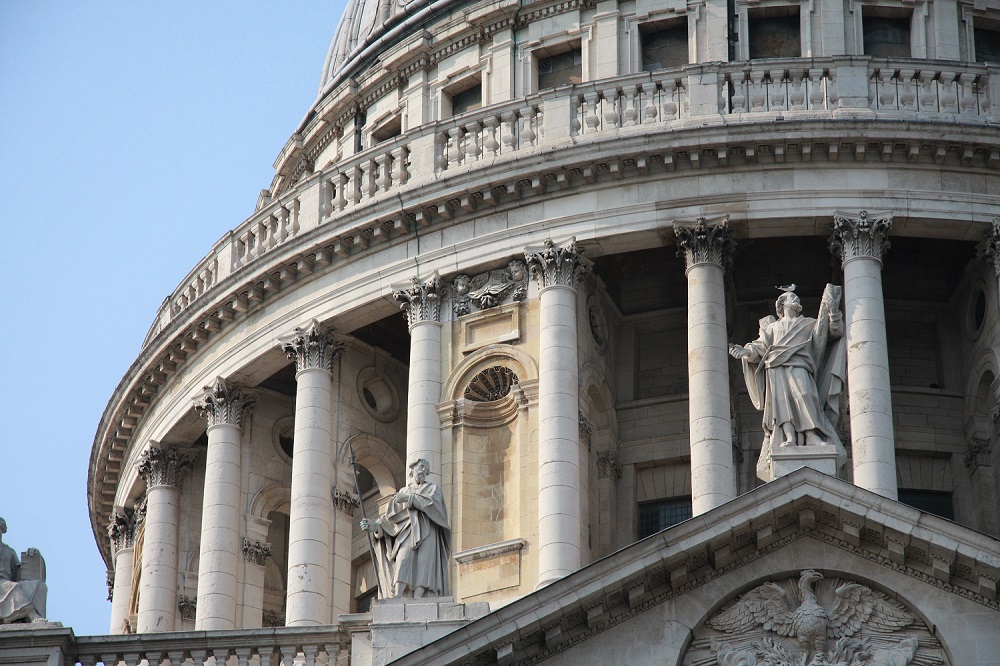
St Paul's CatherdralA Cathedral dedicated to St Paul has overlooked the City of London since 604AD, the current Cathedral was designed by Sir Christopher Wren and built between 1675 and 1710 after its predecessor was destroyed in the Great Fire of London. Services have included the funerals of Lord Nelson, the Duke of Wellington and Sir Winston Churchill; Peace services First and Second World Wars; Royal Weddings, in 2001 the wedding of Charles, Prince of Wales, to Lady Diana Spencer.

Sight 2 - St James's PalaceGuildhall, London


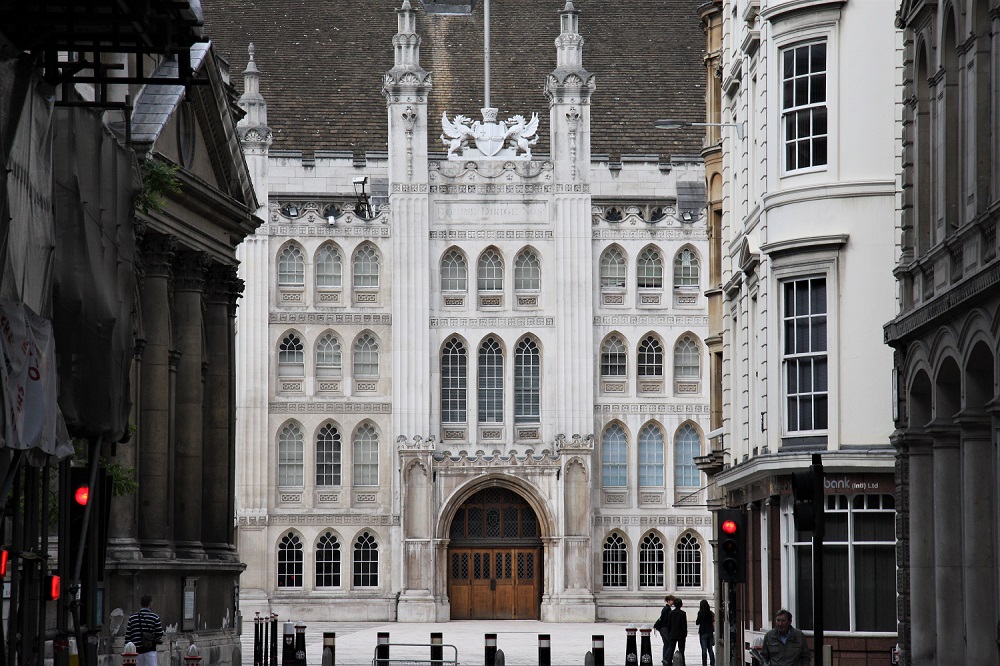
Guild Hall, LondonGuildhall has been the City powerhouse since the twelfth century. In an era when the Lord Mayor of London rivaled the monarch for influence and prestige, this was where he and the ruling merchant class held court, fine-tuned the laws and trading regulations that helped create London’s wealth. Today, 800 years on, Guildhall is still acts as a grand setting for glittering banquets in honour of visiting Heads of State and other dignitaries and royal occasions.

Sight 3 - Mansion House


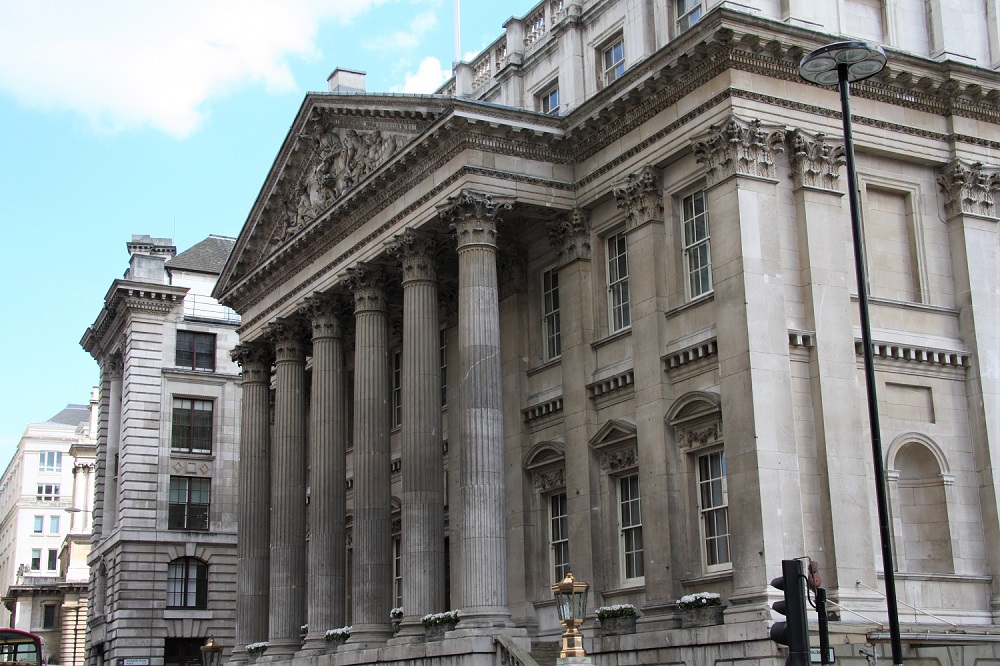
Mansion HouseMansion House is a rare surviving Georgian town palace in London. With its magnificent interiors and elegant furniture, the Mansion House provides the Lord Mayor of the City of London with living, working and entertainment space. The dinners and banquets have always been splendid occasions: once upon a time they would last several hours, and guests would take food to the window to hand down to waiting friends and servants.

Sight 4 - St Stephen Walbrook St Stephen Walbrook
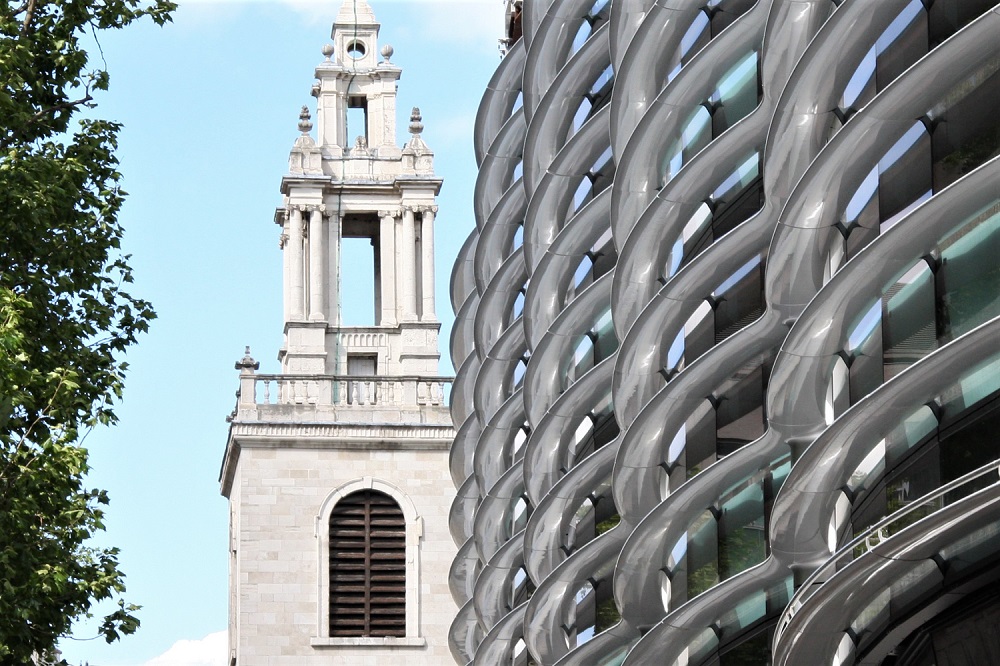

Church of St Stephen WalbrookIn the second century A.D. a temple of Mithras stood on the bank of the river Walbrook. Sir Christopher Wren, from 1672 –1680 rebuilt St Stephen Walbrook, the Lord Mayor’s parish church, after the Great Fire of London in 1666. The church has a plain exterior, but Classical interior, the spire was added in 1717. The Walbrook (now vanished) running across London from the City Wall near Moorefield’s to the River Thames.

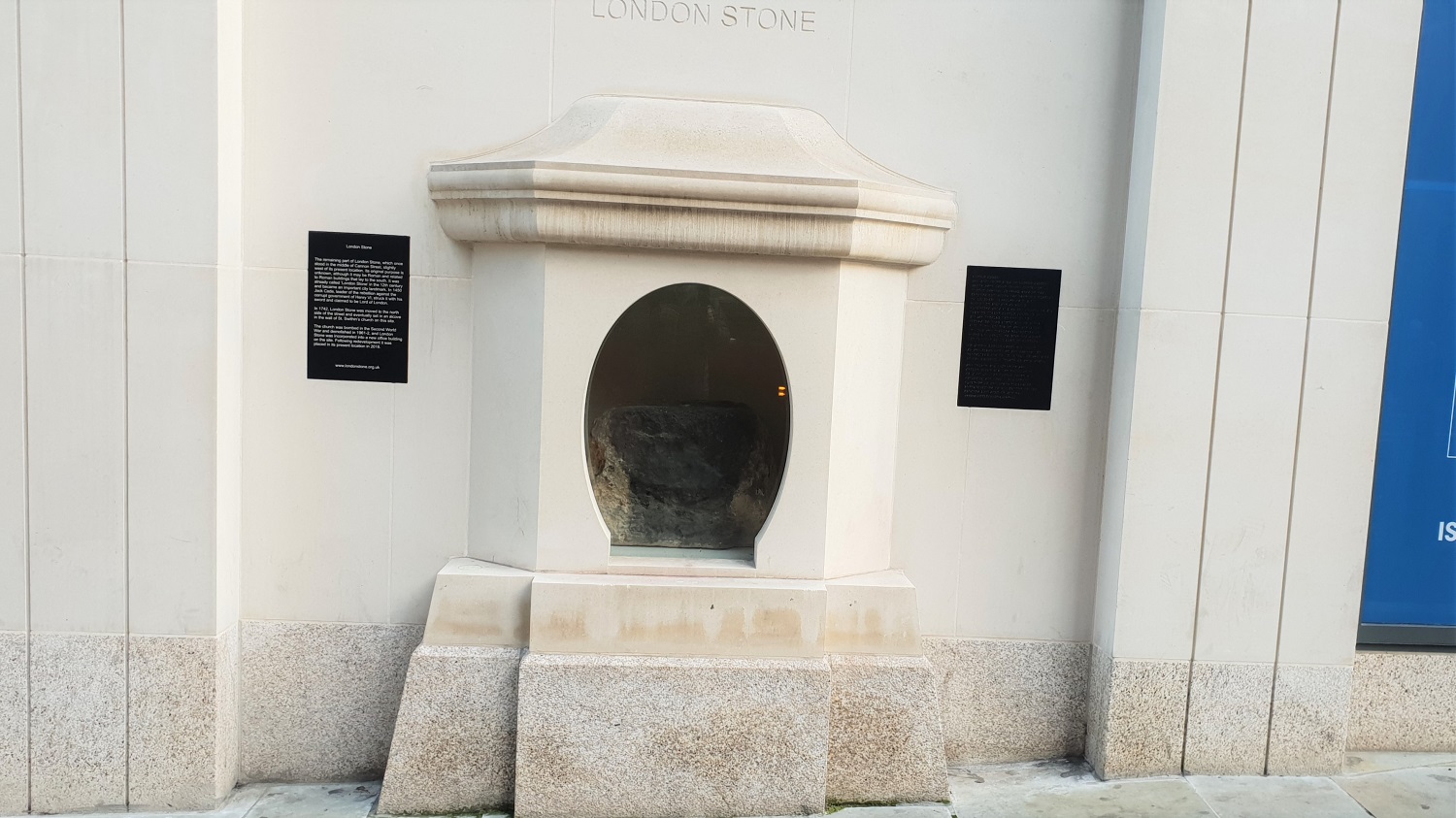
Sight 5 - London StoneLondon Stone


The London StoneThe London Stone is the place from which the Romans measured all distances in Britannia. Recognised as the symbolic authority and heart of the City of London it was the place where deals were forged and oaths were sworn. The Stone was set into the wall of St Swithin's Church which was on this site before it was bombed during the Second World War. The Stone was originally situated in the middle of Cannon Street and was and mentioned by Shakespeare, William Blake and Dickens.

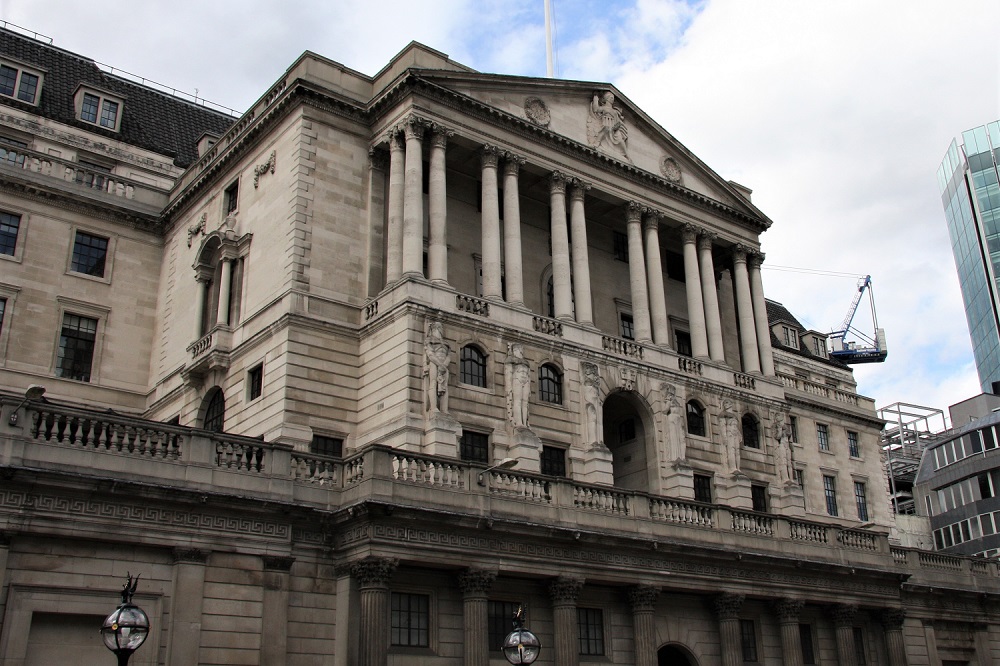
Sight 6 - Bank of EnglandThe Bank of England


The Bank of EnglandThe Bank of England was founded in 1694 to act as the Government's banker and debt-manager; it is now at the centre of the UK's financial system. The Bank of England has been issuing banknotes for over 300 years and is often referred to as the 'Old Lady' of Threadneedle Street. It has its own museum, which is free to entre.

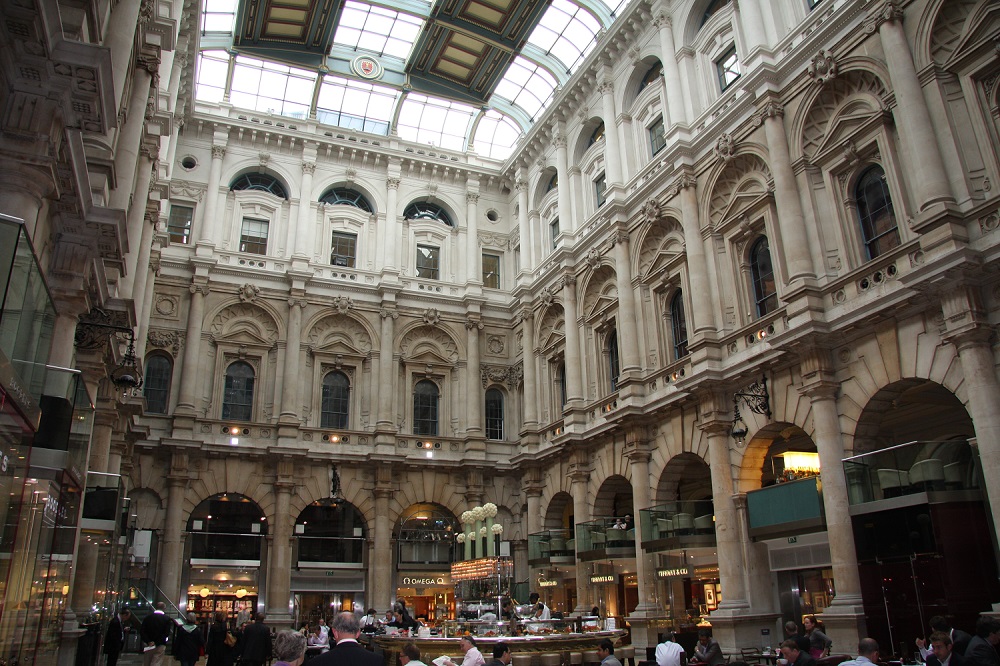
Sight 7 - The Royal ExchangeThe Royal Exchange


The Royal Exchange, LondonThe Royal Exchange was originally set up by Sir Thomas Gresham in 1566 in an attempt to supplant the Bourse at Antwerp as the chief European market-place. London merchants met here daily and soon became the centre of the country's industry. Elizabeth I named it the Royal Exchange in 1571. The Royal Exchange ceased to act as a centre of commerce in 1939, it is now a luxurious shopping centre. During the 17th century, stockbrokers were not allowed in the Royal Exchange due to their rude manners.

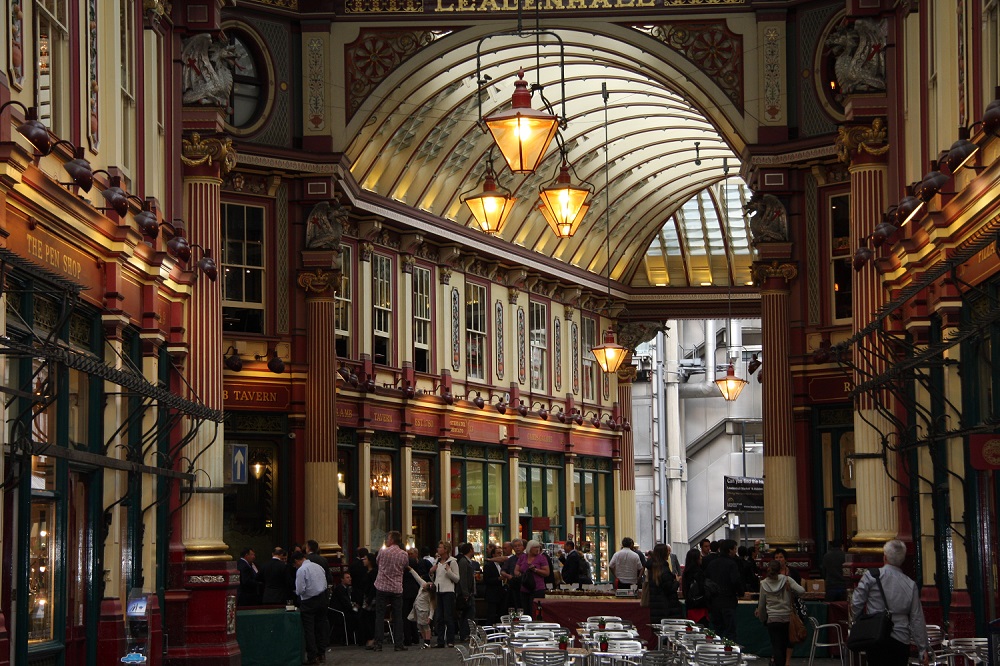
Sight 8 - Leaden Hall MarketLeaden Hall Market


Leadenhall Market, London architectureLeadenhall Market is a covered market dating back to the fourteenth century. Originally a meat, game and poultry market, it stands on what was the centre of Roman London. Sir Horace Jones designed the ornate roof structure and cobbled floors of the current building in 1881. Open from 07:00-late Monday to Friday, it sells fresh food including cheesemongers, butchers and florists. Hollywood notices the charms of Leaden hall in 2001 when it is used as Diagon Alley in Harry Potter and the Philosopher’s Stone.

Sight 9 - Lloyds of LondonLloyds of London


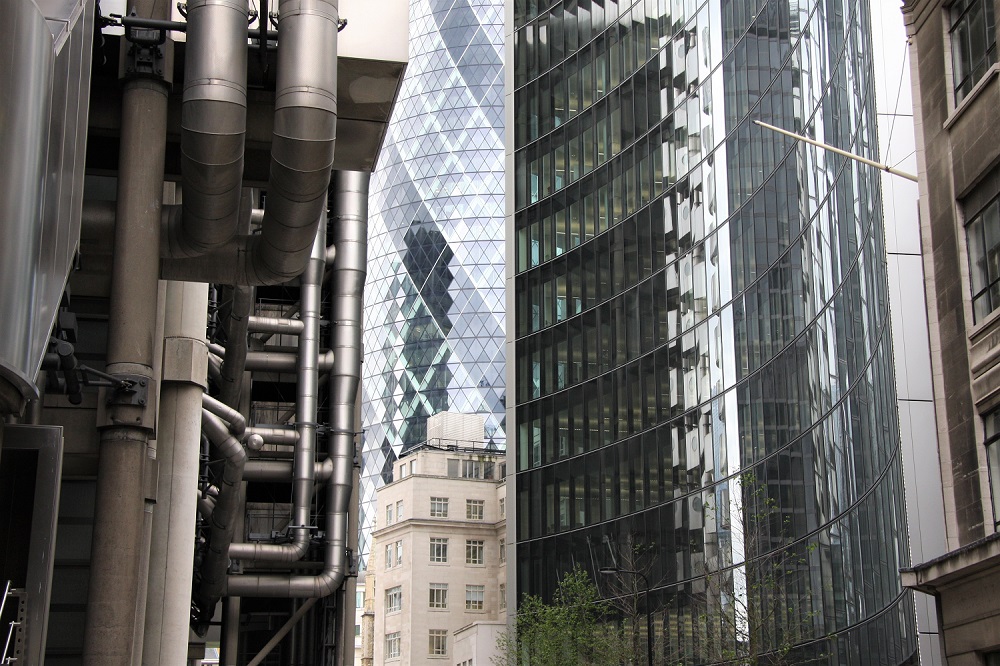
Lloyds of London building lutine bellLloyd's earliest home was Edward Lloyd's coffee house, firmly established by 1688; it was a small club of marine underwriters. In 1986 HM The Queen officially opened the new building, designed by architect Richard Rogers. The Room is Lloyd's main underwriting area and it works very much like a street market. It still houses the famous Lutine Bell, which was rung every time a ship was lost. Known as The Inside-Out Building, the cranes on the top are only for decoration. Sadly Lloyds is not open to the general public.

Sight 10 - Gherkin towerThe Gherkin, 30 St Mary Axe


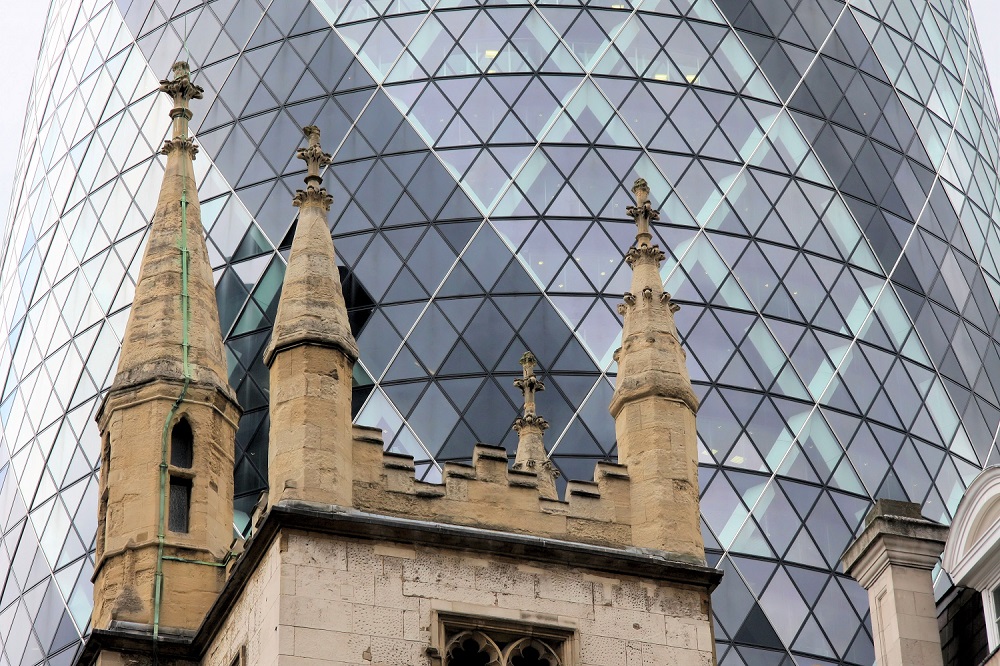
Gherkin tower building london Lord Foster30 St Mary Axe, also known as the Gherkin, was designed by Lord Foster and opened in 2004. It is 180 meters (591 ft) tall, with 40 floors. In a survey of the world's largest firms of architects the building was voted the most admired new building in the world. Despite its overall curved glass shape the building, there is only one piece of curved glass on the building — the lens-shaped cap at the very top.

Sight 11 - Monument, London great fire of london 1666Monument, Great Fire of London 1666


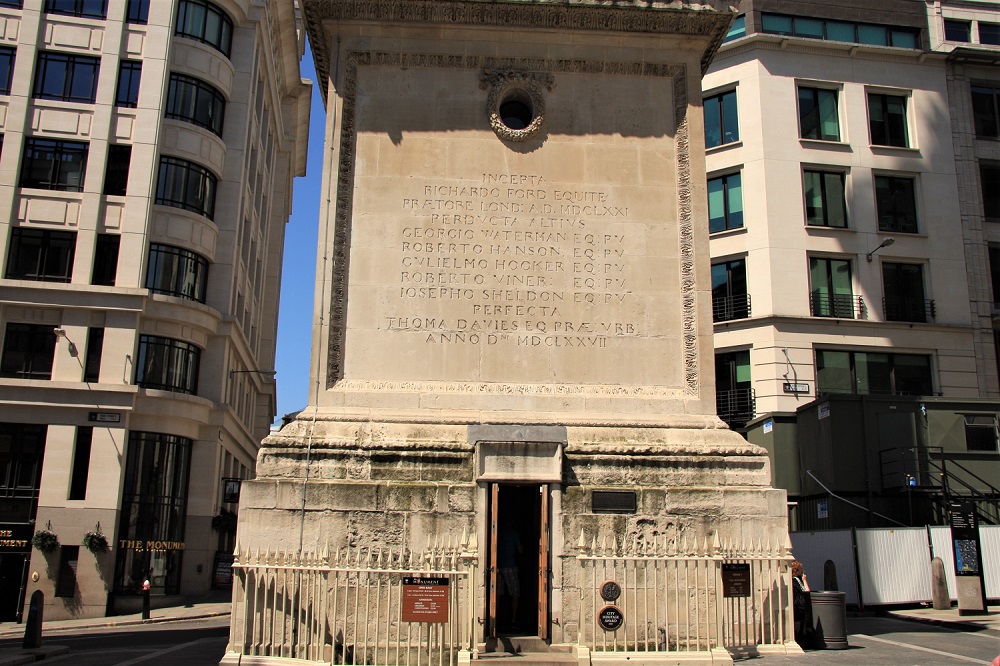
Monument pudding lane londonThe Monument, Designed by Sir Christopher Wren, was built between 1671 and 1677 to commemorate the Great Fire of London and to celebrate the rebuilding of the City. The fire began in a baker's house in Pudding Lane on Sunday 2nd September 1666 and finally extinguished on Wednesday 5th September, after destroying the greater part of the City. Fortunately there was little loss of life. The Monument is 202 feet tall, the exact distance between it and the start of the fire in Pudding Lane. There are 311 steps to the viewing platform, no lift!


City of London Walk historic sights streets and markets in the square mile

                      SECTION 1:   St PAUL'S CATHEDRAL to GUILDHALL
City of London Walk St Paul's Catherdral to Guildhall

Our City of London Wall STARTS at St Paul's Underground Station. Come out of the station at EXIT 2. St Paul's Cathedral will be behind you, walk down to ST PAULS CHURCH YARD EC4 turn right and walk around to the front of the Cathedral. Continue walking counter-clockwise around the Cathedral to the rear, then go straight across NEW CHANGE EC4 into WATLING STREET EC4.

Take the 2nd left into BOW LANE EC4. At the end walk straight across CHEAPSIDE EC4 into HONEY LANE EC4. Turn right into TRUMP STREET EC4 then left into KING STREET EC4, at the end cross GRESHAM STREET EC4 and entre GUILDHALL.

SECTION 2: GUILDHALL to THE ROYAL EXCHANGE
City of London Walk Guildhall to The Royal Exchange

From Guildhall turn left into GRESHAM STREET EC4 then 2nd left down OLD JEWRY EC4. At the end turn left into POULTRY EC4. Walk down to the junction with QUEEN VICTORIA STREET EC4 and cross the road, Mansion House, the Lord Mayor of London's Residence, is 50m on the right. Walk round behind Mansion House, down WALBROOK EC4 to the Church of St. Stephen Walbrook.

Continue down Walbrook, at the end turn left into CANNON STREET EC4. The London Stone is 10m on the left, behind a grill on the pavement. Continue up Cannon Street, take the next left ST SWITHINS LANE EC4, and walk up to the end. Turn left onto KING WILLIAM STREET EC3, which changes into LOMBARD STREET EC3. Continue up Lombard Street to the busy BANK junction and turn right into THREADNEEDLE STREET EC2. The Bank of England is 50m on the left, with the museum entrance on the right side of the building in Bartholomew Lane EC2.

The Royal Exchange is opposite the Bank of England, at the junction of CORNHILL EC2 and THREADNEEDLE STREET EC2.


SECTION 3:  THE ROYAL EXCHANGE to THE GHERKIN, ST MARY AXE
City of London Walk The Royal Exchange to The Gherkin

Continue up THREADNEEDLE STREET EC2 and take the 1st road on the right, ROYAL EXCHANGE BUILDINGS EC2 which is behind the Royal Exchange. At the end turn left into CORNHILL EC2 then right into GRACECHURCH STREET EC3. Walk down Gracechurch Street and take the 1st left into Leadenhall Market.

Walk through Leadenhall Market to the end of LEADENHALL PLACE EC3. Turn left into LIME STREET EC3 and walk to the end of the road, passing the Lloyd's Building on the left and the Willis Building on the right, to LEADENHALL STREET EC3. Cross straight over Leadenhall Street into ST MARY'S AXE EC3. Walk up St Mary Axe to Number 30 - the Gherkin Tower.


SECTION 4:  THE GHERKIN, ST MARY AXE to MONUMENT
City of London Walk The Gherkin to Monument

Turn-around and re-trace your steps back down LEADENHALL STREET EC3 and LIME STREET EC3 past the Lloyd's and Willis Buildings. Continue straight on past LEADENHALL PLACE EC3 to the end of Lime Street.

At the end of LIME STREET EC3 go straight across FENCHURCH STREET EC3 into PHILPOT LANE EC3. Take the 1st right into EASTCHEAP EC3, cross the road and then take the 1st left into PUDDING LANE EC3. At the end turn right into MONUMENT STREET EC3 and walk up to the Monument.